I love to eat! But I'd rather not spend a lot of time cooking. I developed these crockpot recipes with inspiration from Heaven's Banquet—Vegetarian Cookbook by Miriam Hospodar, and The Ageless Woman—Natural Health & Beauty After Forty, by Dr. Nancy Lonsdorf, an expert in the system of natural medicine called ayurveda.
For a recipe index, see the Blog Archive below.
Crockpot Soupe Basics:
I'm an intuitive cook; I use words like "about" or "handful". My recipes make about four servings of hearty soup. The basic measurements are: 1/4 - 1/3 cup whole grain; approx. 1/3 cup lentils; 1.5 quarts of water; 1.5 - 2 Tablespoons of ghee (clarified butter, highly recommended by ayurveda) or vegetable oil; 1 teaspoon of salt; 1 rounded Tablespoon of spices; and about 3 cups of mixed veggies. I use, and recommend, organic ingredients for the purest food and optimal nutrition. I hope this blog helps you enjoy good eatin', good health, and creative cooking! I love to hear your comments.
Sincerely,
Ondine

Tuesday, December 15, 2009

Cabbage soup with panir

Yum! This is a complete “Indian meal” in soup form, minus the gulab jamin.

Yesterday evening I made panir, a delicious fresh cheese. This soup may also be good with crumbled tofu*, but the flavor of panir is wonderful. Here is a sure-fire method, taught to me by a friend, which has never failed me: Bring to a boil two glasses (approx. 16 ounces) of organic milk, plus about half a glass of water to prevent the milk from scorching. Use medium heat, and stir pretty much constantly. (In other words, don’t leave the room....) When the milk comes to a roiling boil — and while still boiling — add about 2 Tablespoons of lime juice (Lakewood organic, pure lime juice.) Curds will form immediately, separating from the whey. If the liquid still looks milky, add a little more lime juice. Continue to boil for a few minutes (longer makes firmer panir). Pour through a sieve. (Keep the whey if you want to use it for soup etc. It’s very nutritious.) Fresh panir can be refrigerated but best used by the next day.

Soup starts with 1/2 cup of red lentils, and a heaping 1/3 cup mix of brown basmati rice and millet. Rinse well and bring to a boil in 1/5 quarts of water. Transfer to the crockpot on high heat.

One hour later or so, heat 2-3 Tablespoons of oil. I used sesame oil this time, but ghee or sunflower would be good too. Use medium/low heat and make sure the oil doesn’t start to smoke. If it does, like mine did this morning, start over. (Oils have different smoking temperatures, at which point they become carcinogenic and distasteful. Mustard seed oil is the exception—apparently it becomes tasty, though I've never tried it.)

To the heated oil add 1/2 teaspoon of brown mustard seeds. Sautée finely chopped ginger (1 inch, peeled) and leek or onion (1-2 inches, depending on your onion-preference) until fragrant. Add a heaping Tablespoon of curry powder mix or Vata Churna (from MAPI.com), and a hearty dash of hing. Add some tomato paste and/or several tomatoes—peeled is best—and a little water from the crockpot soup base. Simmer on low for a minute or two.

Add a couple of carrots and half a head of green cabbage, all finely chopped. Add 1 teaspoon of mineral salt, and mix well into the veggies. Add half a can of cooked garbonzo beans and crumble the panir into the mix.

By this time the veggies will be tender/crisp and it’s time to transfer it all to the crockpot. A little squeeze of lemon and a small handful of fresh cilantro... mmmmmm! Mix well, ladle ‘er up and away you go (remembering to turn the crockpot to "warm"...)

* If you opt for tofu, I highly recommend organic if you want to avoid genetically engineered soybeans...

Wednesday, December 9, 2009

Cauliflower soup with nutmeg

I’ve been enjoying the holiday cooking and baking season! For Thanksgiving, I decided to try some recipes in an intimidating Indian cookbook which has been staring at me from the bookshelf for years. While shopping for ingredients in an Indian grocery, I told the owners about my plan. They thought it was so funny, they said they would make a traditional American Thanksgiving meal. I need to go back to follow up... and report my success!

One of the discoveries of the Thanksgiving experiment was a delicious nut paste which I used in today’s soup: I simmered 2 tablespoons of white poppy seeds for half an hour, and soaked 2 tablespoons each of blanched almonds and cashews in warm water for about an hour. Drain the soaking water from the poppy seeds and nuts, place in a blender, adding about 1/4 cup of fresh water. Blend until smooth, and set aside. (I did this yesterday evening.)

Overnight I soaked 3/4 cup of split mung dal. I think a can of organic white beans would also work well. Today I forgot to add grain....! but I would use 1/4 cup of brown basmati, quinoa or millet. (If I were using canned beans, I would simply purée them in a blender and add to the cooked grains. If making this soup without grain, I would add the puréed beans after sauteeing the spices in oil, before adding the veggies.)

I brought the dal to a boil in 1.5 quarts of veggie broth (water would be fine), and transferred it to the crockpot, leaving it on high for a little over an hour while we showered, stretched, and meditated.

In the final countdown to the morning commute, I sautéed a quarter of a sweet onion in 2-3 tablespoons of sunflower oil (or ghee would be great) until the onions become translucent. We aren’t big onion eaters, but they are very healthful so I use them occasionally. I also added about 1/2 teaspoon of freshly ground black pepper. (Note: according to ayurveda, using fresh black pepper heated in ghee is very nourishing for brain tissue, and is recommended for preventing Alzheimer's disease. See The Raj ayurvedic medical spa at www.theRaj.com for an article about this.)

I mentioned nutmeg in the title of this blog, but actually I used powdered mace, my latest culinary fascination. Mace and nutmeg come from the same nut and have similar flavor, so either would work. (Mace has a more subtle, complex flavor.) Freshly grated nutmeg is so much more interesting than the packaged powder; a fine toothed “microplane” zester works really well. In either case, add 1/2 teaspoon of mace or nutmeg to the hot oil and onion mix. (You may need a dash more if using pre-powdered nutmeg.)

Stir in 3 cups of finely chopped cauliflower and dark green chard. Toss in a a few sprigs of parsley, finely chopped. Add 1 teaspoon of mineral salt. Sautée a few minutes until the veggies soften, then add to the crockpot.

Add the nut paste, stir the soup well, and ladle up your thermoses (or turn the crockpot to the lowest “keep warm” setting). And away you go!

On days when I've made more than enough soup for lunch, I leave the crockpot on warm all day and add a big handful of freshly chopped parsley to augment the soup for dinner.

Wednesday, November 25, 2009

Broccoli and cheese soup

This was an experimental soup. It turned out pretty well on first try and I'll continue to play variations on this theme.

I used split mung dal (beans) to add a creamy consistency without using cream or flour. It's not as smooth as a true cream-based soup, but if you have time you can blend the dal once it is cooked, before adding veggies.

1/3 cup split mung beans and 1.5 quarts of water or broth. Bring to a boil and transfer to the crockpot. Add a small amount of sunflower oil or ghee, and simmer on high for about 45 minutes to an hour.

Heat 2 Tablespoons of butter, or ghee (clarified butter). Add 1 inch of leek or green onion, finely chopped (or a hefty dash of hing, if you don't want onions), and 1 celery stock, finely chopped. Add 1 -2 Tablespoons of Simply Organic All Purpose Seasoning, and sautée the mix until the leek and celery are soft.

Toss in a small handful of chopped parsley. Add a dash or two of black pepper, and half teaspoon of salt.

Add 1-2 cups of chopped broccoli florets and 1 chopped carrot, coat the veggies thoroughly with the spice/oil mixture and transfer to the crockpot, adding it to the mung dal.

I found a wonderful raw goat milk Italian herb colby at my local co-op. Cheddar or gouda could also be nice for this soup. Stir in 1-2 cups of grated cheese, and you're all set!

Ladle to the thermos, and turn the cooker to low for the remainder of the soup.

Monday, November 23, 2009

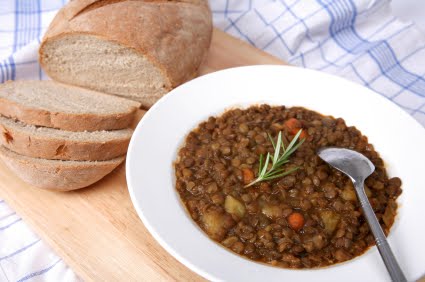
Hearty lentil soup


A cozy, nutritious soup for a cold, wet, winter day!

1/3 cup brown lentils or French lentils.
1/4 cup mix of brown rice and millet. (Do I need to say it? Look for tiny rocks, and wash the lentils and grains thoroughly.)
1.5 quarts of water or broth.

Bring the lentils and grains to simmer on the stove top, then transfer to your slow cooker on high. Add about 1 teaspoon of extra virgin expeller pressed olive oil, and 1 large bay leaf, in the crockpot. Come back in about an hour or so.

Warm about 2 tablespoons of olive oil on very low temperature; do not let it get hot enough to smoke. Add 1-2 tablespoons of Simply Organic All Purpose Seasoning (if you're using water instead of broth, use more spice). When you smell the aroma, stir in finely chopped ginger root, and an ample handful of finely chopped parsley (Italian flat parsely or curly parsley). Add a dash of asafoetida (hing)—optional. (Everything is optional, of course...) You could use an "inch" of finely chopped leek or green onions instead of hing. If you've got fresh oregano, thyme, or marjoram, add about a teaspoon of finely chopped herbs for an extra flavorful stew.

Add 2 chopped carrots, 1 chopped medium potato, and a generous amount of finely chopped green kale. You could also add a little tomato puree, or 2-3 chopped sun-dried tomatoes. Add 1 teaspoon of mineral salt. Sautée until the kale wilts, then transfer to the crockpot.

If you're feeling abundant, add a handful of pine nuts—or sunflower seeds will do—for extra protein, a little crunch, and delicious flavor.

Important: Scoop out that bay leaf so that you, or your loved ones, don't get a nasty sharp poke in the mouth!!

Ladle up your soup, and away you go with thermos in hand. Or for those, like me, who commute from the home office down the hall, turn your cooker to low, and enjoy the aroma until lunchtime.

Monday, November 9, 2009

Spices for crockpot cooking

Here are the spices I keep on hand for a variety of soup recipes. (Generally, I use one well-rounded Tablespoon of any spice blend):
  • "Smart Spice Mix", an ayurvedic blend from Dr. Lonsdorf's book The Ageless Woman. (See May 2009 Blog Archive for the recipe, and read the book for an understanding of medicinal properties of herbs and spices.)
  • Lemon Curry powder from Frontier Herbs (an organic blend of turmeric, coriander, cumin, lemon peel, black pepper, freeze-dried whole lemon, cardamom, cinnamon, dehydrated garlic and red pepper/cayenne.)
  • "All-Purpose Seasoning" from Simply Organic (a blend of black pepper, onion, garlic, parsley, celery seed, tomato powder, basil, thyme, sage, oregano, and coriander)
  • Individual spices such as turmeric, cumin seeds, coriander seeds, black pepper corns.
  • Maharishi Ayurveda Products (www.mapi.com) have spice blends called churnas. Easy to use, and delicious, churnas balance the mind and body according to the season or individual needs.
I also keep on hand:
  • Fresh parsley is loaded with nutrients.
  • Fresh cilantro aids digestions. Wonderful for Asian, Mexican, Middle Eastern, and fusion recipes.
  • Fresh ginger root aids digestion and absorption, and reduces inflammation in the body. How to use: Grate it or chop finely. Add to the hot oil and sautée briefly before adding other spices and vegetables. Store ginger root in a paper bag in the fridge.
  • One can of coconut milk, whole or lite, to use for Asian-inspired or creme soups.
  • One small jar of Thai green curry paste.
  • Brown mustard seeds. How to use: Heat oil on medium, and add 1/2 teaspoon mustard seeds to hot oil. When they start to pop, reduce temperature and add other spices. (If using mustard seeds and ginger root, do the mustard seeds first, then ginger, then any other spices.)
  • Hing, aka asafoetida, is a pungent powdered resin available in Asian groceries or well-stocked health food stores. Don't be put off by the smell; the flavor is wonderful! How to use: Add a dash after sautéeing other spices on medium/low heat. Make it brief. Don't let it burn... it's not pleasant.
  • Natural mineral salt
Nice to know: Coriander seeds can be ground in a spice blender or "Magic Bullet" and used in Mexican, Italian, and Asian recipes. A dash of turmeric added to grains and lentils after they've cooked is a great way to incorporate it's anti-inflammatory benefits into any recipe. Black pepper, freshly ground, aids absorption of nutrients. Asafoetida is said to help reduce gas and lower cholesterol.

Keep all spices in air tight containers, not plastic baggies.

Wednesday, October 14, 2009

Spicy peanut broccoli soup, and a note about CSA's

Broccoli is one of my favorite vegetables. It's one of the most nutritious of veggies, and I find that it complements the flavors of spices beautifully.

For this soup I used red lentils and white basmati rice, but green French lentils would be nice, as would brown rice, quinoa, or millet. About 1/3 cup of each, washed, rinsed and then brought to simmer in 1.5 quarts of water. When it comes to a boil, I transfer it to the crockpot and let it cook on high for about an hour.

Then comes the fun part:
  • Bring 2 Tablespoons of organic sesame oil to medium/high heat and then add a dash of brown mustard seeds. When they start to pop, turn the heat down to medium/low.
  • Add a "thumb size" amount of fresh ginger root, finely chopped or grated.* Sautée for about 30 seconds.
  • Add 1/2 teaspoon of red chilie flakes, or more if you like it hot. A dash of hing (asafoetida), or one inch of leek or a garlic scape—finely chopped—are also delicious, nutritious options. Sautée briefly.
  • Stir in a heaping Tablespoon of organic peanut butter and blend with the spicy oil.
  • Add 2-3 cups of prepped veggies and stir to coat the veggies with the spicy oil mixture.** I love the taste of broccoli in this soup, but zucchini, eggplant, green beans, and/or carrots are also great. (When using eggplant or green beans, add a small amount of water and allow them to cook for about 5 minutes, stirring a few times, before the next step.)
  • Transfer the veggies and spice mix to the lentils and grains in the crockpot.
  • Stir in one teaspoon of salt and a dash of turmeric.
  • Toss in a handful of peanuts and fresh cilantro right before ladling the soup into your thermos.
*To keep ginger root fresh, store it in a small paper bag in the darkest part of your fridge — or peel and freeze to be grater-ready).

** A note about fresh vegetables and Community Supported Agriculture
I've seen time-saving suggestions to chop a week's worth of vegetables in advance. However, as soon as veggies are chopped, they begin to lose nutritional value. (Indeed, once they are picked they start to lose value.) Ayurveda recommends chopping vegetables freshly for each meal, but if you're like me, that's not a practical option. So, my compromise it to prep the night before.

Fresh produce has the best nutritional value and flavor. Short of growing your own garden, Community Supported Agriculture (CSA) farms are a great resource for the freshest vegetables. Members pay a subscription fee to a local farm, and during the growing season, receive a steady supply of produce. Although CSA's are winding down for the season in my area, this is a good time to look for one near you. They often offer discounts on early subscriptions for the next season. Joining an organic CSA not only means you can save a bunch of money on high quality food, it also strengthens your local economy, contributes to a healthier environment, and supports the people who are willing to go to all the "trouble" to grow our food! Check out the USDA site about Community Supported Agriculture, click here.

Check out Real Food Wednesdays hosted by kellythekitchenkop.com and cheeseslave.com

Monday, October 5, 2009

Autumn is soup season

As seasons change, you might notice your body making changes too. Here in Western North Carolina, fall came with the honking of geese, a deluge of rains followed by glorious, cool, sunny days, cascading leaves, and darker, sleepier mornings. And the subtle aching of my hip joints...

The weeks of transition from one season to the next is the best time to detox, to alleviate any imbalances that may have accumulated during the previous season, and tune-up our bodies for the coming months. Joints, in particular, can give us clues to our overall state of health. Arthritis, according to the natural health system called Ayurveda, indicates the build up of toxins caused by less-than-perfect digestion. Ayurvedic physicians recommend cooking with ginger and turmeric to cleanse impurities from our system, and improve digestion and absorption. Dr. Andrew Weil recommends the same spices as part of his "anti-inflammatory diet" to reduce arthritic pain (among many other benefits).

Warm vegetable soup spiced with ginger root and turmeric is an excellent way to lighten your diet during a seasonal cleanse. Soup for dinner is a good way to improve digestion and the quality of your sleep. (A heavy meal in the evening is not fully digested before going to sleep, which leads to toxins, says Dr. Nancy Lonsdorf, a medical doctor and expert in Maharishi Ayurveda.) An after dinner walk aids digestion, and is a peaceful way to connect with your spouse, kids, neighbors or your family dog.

Nia fitness helps me keep moving comfortably. On days when my hips feel a little creaky, an hour of Nia restores the bliss, and feels like a warm oil massage! (Which, by the way, is another recommendation from Ayurveda. I love MAPI's Joint Soothe massage oil.)

For more information about Ayurvedic recommendations for joint health, click here.
Also see Dr. Weil's website for information about the anti-inflammatory diet.

For soups made with ginger root and turmeric, and antioxidant rich vegetables, continue reading here!

Enjoy an invigorating autumn (or spring, if you happen to be in the southern hemisphere.)